
Building the Demand Engine Behind 3× ARR Growth
GTM strategy · Demand generation · ABM · Partnerships · Lifecycle · Attribution · Commercial reporting
CASE STUDIES
7/14/20262 min read
Executive Summary
A B2B SaaS company needed a more predictable commercial model to support growth beyond founder-led sales and outbound acquisition.
Through an 18-month consulting engagement, I operated as fractional Head of Marketing Strategy, working with internal sales, product, and customer teams while managing specialist freelancers responsible for campaign execution, content, events, design, and marketing operations.
The work established a repeatable demand-generation model combining enterprise ABM, partner-led acquisition and mid-market demand generation, supporting company growth from approximately €1 million to €3.1 million ARR.
My Role
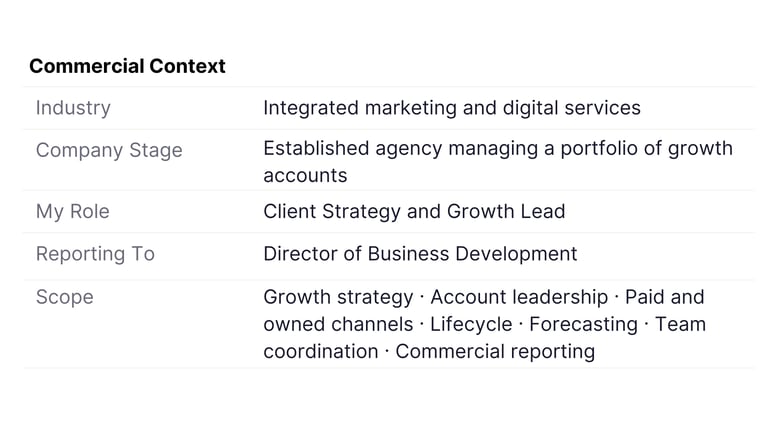
I led the marketing strategy and operating model through my consultancy, working as an embedded member of the leadership team.
My role combined GTM strategy, programme leadership and delivery management. I coordinated internal subject-matter experts and managed external specialists responsible for implementing growth campaigns, digital programmes and marketing infrastructure.
I also contributed to budgeting, scope planning and revenue forecasting, ensuring that marketing investment and delivery capacity remained aligned with commercial objectives.
What Changed
The company moved from fragmented marketing activity and founder-dependent acquisition towards a diversified commercial model combining enterprise ABM, demand generation and partner-led growth.
Marketing became a structured function with clearer ownership, stronger commercial measurement and repeatable delivery processes. The business gained the pipeline visibility and acquisition capability required to support growth from approximately €1 million to €3.1 million ARR.
The Commercial Challenge
The company had demonstrated demand, but growth remained heavily dependent on founder relationships, outbound sales and a relatively small number of customer accounts.
Marketing activity was fragmented across individual campaigns, webinars, content and events. Enterprise and mid-market buyers were treated through the same funnel, partnerships were managed informally, and reporting focused primarily on activity rather than qualified pipeline and revenue.
The challenge was to build a more predictable demand engine without immediately creating a large permanent marketing department.
Strategic Decisions
The programme focused on building a coordinated commercial system rather than increasing campaign volume.
This included:
Defining the ICP and segmenting the market around commercial potential
Creating separate enterprise ABM and mid-market demand-generation motions
Building a structured webinar and educational-content programme
Developing referral, technology and audience partnerships
Introducing account-level lifecycle and qualification stages
Connecting campaign engagement to sales follow-up
Building attribution and commercial reporting across pipeline, conversion and ARR
Coordinating internal experts with specialist freelancers through clear scopes, ownership and delivery plans
Aligning budgets and execution priorities with revenue forecasts
Commercial Outcomes
Business Performance
Supported company growth from approximately €1 million to €3.1 million ARR
Increased qualified pipeline coverage from 1.8× to 3.4×
Grew partner-sourced pipeline from 8% to 31%
Reduced CAC payback from 14 months to nine months
Increased sales acceptance of marketing-generated opportunities from 43% to 69%
Generated approximately €1.1 million in webinar- and content-influenced pipeline
Created 19 qualified enterprise opportunities through the account-based programme
Organisational Impact
Established separate enterprise and mid-market acquisition motions
Turned partnerships into a structured commercial channel
Introduced account-level qualification and lifecycle management
Connected marketing programmes to pipeline, conversion and ARR
Created a flexible delivery model combining internal expertise with specialist freelance capability
Documented repeatable processes that could continue after the consulting engagement